
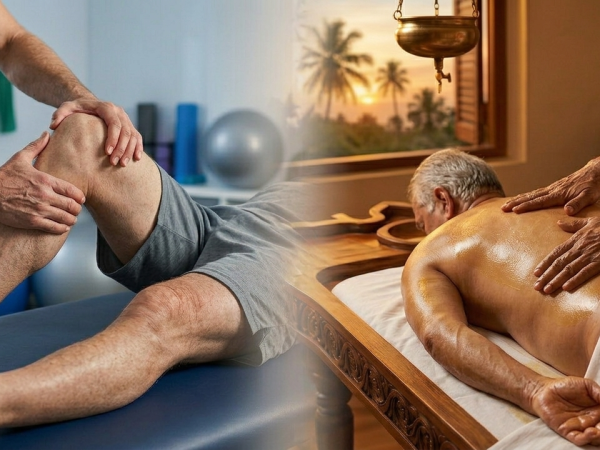
For any athlete or fitness enthusiast, a sports injury is more than just a physical setback—it is a disruption of lifestyle. Whether it’s a stubborn runner’s knee, a rotator cuff tear, or a chronic lower back strain, the goal of recovery is always the same: get back to peak performance as quickly and safely as possible.
While traditional rehabilitation often focuses solely on the mechanics of the injury, a holistic approach combining Ayurvedic Abhyanga and Modern Strength Training offers a superior path to recovery. Here is why this integrated methodology is becoming the gold standard for sports injury rehabilitation.
The Role of Abhyanga: “Oiling the Hinges” of the Body
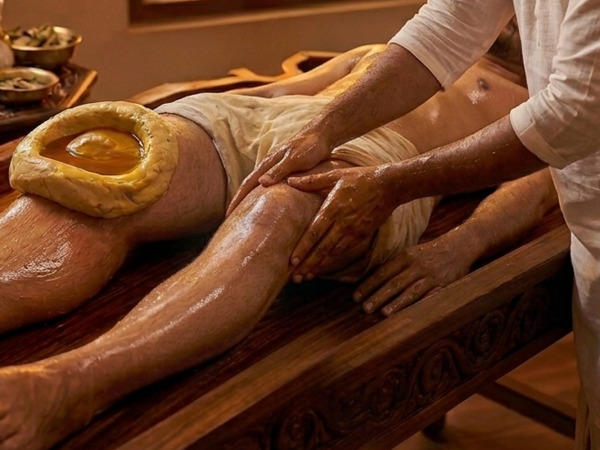
In Ayurveda, sports injuries are often viewed as an aggravation of Vata dosha (the energy of movement), leading to dryness, stiffness, and pain. Abhyanga, a traditional Ayurvedic warm-oil massage, serves as the first line of defense in the recovery process.
- Reducing Systemic Inflammation: Using medicated oils like Mahanarayana Taila, Abhyanga helps penetrate deep into the tissues to soothe inflammation and flush out metabolic waste (ama) accumulated during the injury.
- Improving Circulation: The rhythmic strokes of a professional Ayurvedic massage stimulate blood flow to the injured site, delivering the oxygen and nutrients essential for cellular repair.
- Enhancing Tissue Elasticity: Just as a machine needs oiling to prevent friction, the muscles and tendons require lubrication to regain their range of motion. Abhyanga prevents the formation of scar tissue and keeps joints supple.
Strength Training: Rebuilding the Mechanical Foundation Purification
While Ayurveda prepares the body internally, Physiotherapy-led Strength Training addresses the external mechanics. After the initial inflammatory phase is managed, the focus must shift to functional restoration.
- Correcting Biomechanical Imbalances: Often, a sports injury occurs because one muscle group is overcompensating for a weaker one. Strength training identifies these “weak links” and corrects them.
- Neuromuscular Re-education: Injury often disrupts the connection between the brain and the muscle. Targeted exercises “re-train” the nervous system to activate the correct muscles during movement.
- Future-Proofing the Body: Strengthening the muscles surrounding a joint—such as the glutes for knee stability or the core for back health—creates a “natural brace” that prevents re-injury.
The Synergy: Why You Need Both
The limitation of using only one modality is clear: Abhyanga alone provides relief and flexibility but may leave the muscle weak. Strength training alone can sometimes be painful or lead to further strain if the tissues are too tight and inflamed.
When combined, they create a healing loop:
- Abhyanga softens the muscle fibers and reduces pain, making it easier for the athlete to perform physiotherapy exercises without discomfort.
- Strength Training then builds the necessary power and stability to support the newly flexible tissues.
- The Result: A faster transition from the therapy table back to the gym or the track.
Recovery for the Active Singapore Lifestyle
In a fast-paced environment like Singapore, where weekend warriors tackle everything from the Standard Chartered Marathon to high-intensity CrossFit sessions, “rest” is rarely the preferred option.
At Indian Ayurveda Center, we understand that recovery needs to be efficient. By integrating the ancient wisdom of Kerala-style Ayurveda with modern Physiotherapy, we provide a comprehensive recovery roadmap tailored to your specific sport and body type.
Commonly Asked Questions about Holistic Recovery
How soon after an injury can I start Abhyanga?
Typically, once the acute swelling (the “red and hot” phase) has subsided—usually 48 to 72 hours—Abhyanga can be introduced to aid the healing process.
Can I do strength training and Ayurveda on the same day?
Yes. In fact, many athletes find that receiving an Ayurvedic massage after a physiotherapy session helps prevent post-exercise soreness and promotes faster muscle fiber repair.
Is this approach suitable for chronic old injuries?
Absolutely. Chronic pain often involves deep-seated stiffness and long-term muscle weakness. The combination of deep tissue lubrication and progressive loading is highly effective for “resetting” old injuries.
Take the First Step Toward Pain-Free Performance
Don’t let a sports injury become a long-term limitation. Whether you are professional athlete or a fitness hobbyist, our dual-specialty team is here to help you rebuild stronger than before.
[Contact Indian Ayurveda Center today for a Holistic Injury Assessment.]
Seek professional guidance for customized therapy plans
Find out more today at Indian Ayurveda Center at Blk 352, Clementi Ave 2 #01-101, Singapore 120352 !