
- Headaches are common, but migraine is a real neurological condition, not just "a bad headache." Singapore's stress-heavy work culture is linked to a rising burden, costing an estimated SGD 1.04 billion a year.
- Ayurvedic therapies like Shirodhara and Nasyam are traditionally used to support stress-related head tension. They are not a cure for migraine, and no honest source should say otherwise.
- Some headache patterns need a doctor first, not a therapy session. This piece covers which ones.
There's a specific kind of headache that shows up around 4pm, tight across the forehead, a dull weight behind the eyes, the kind that started somewhere between the second cup of coffee and the third back-to-back call. If you've searched something like ayurvedic treatment for headache singapore hoping for an honest answer rather than a sales pitch, you're in the right place.
Singapore has one of the fastest-growing migraine burdens among high-income countries, and researchers point to the city's competitive, always-on work culture as a likely driver, with prevalence here estimated at around 1 in 10 people. A nationwide study led by Duke-NUS and NUH put the annual cost of migraine to the Singapore economy at SGD 1.04 billion, mostly from lost productivity, and found that roughly one in four sufferers here never sought medical treatment for it at all.
That last number is the one worth sitting with. A lot of headache advice online, including from Ayurveda clinics, either overpromises or skips the "see a doctor" conversation altogether. We cover the fuller range of patterns on our headache condition page, but this piece does something narrower: five common claims about Ayurveda and headaches, checked against what the research and Singapore's own health authorities actually say.
Myth: Ayurveda Can Cure Migraines
No. Migraine is a chronic neurological condition, not a temporary ache, and no complementary therapy, Ayurvedic or otherwise, cures it. Ayurvedic therapy in Singapore is a wellness and complementary practice, not a substitute for a migraine diagnosis or treatment plan from a doctor.
This is the claim that shows up most often on Ayurveda websites here, and it's the one worth correcting first. Mayo Clinic describes migraine as a neurological condition causing recurring, often one-sided headaches that can last from hours to days, frequently with nausea and sensitivity to light and sound. It's a diagnosis with known, if not fully understood, biological mechanisms, not a symptom that clears once a "root cause" is addressed.
Some Ayurveda marketing in Singapore claims otherwise, up to and including specific recovery percentages with no clinical citation behind them. We won't do that here. What we can say honestly is that some clients find warm-oil therapies like Shirodhara genuinely calming for stress-related head tension, and there's early clinical interest in how it affects stress markers in the body. That's a meaningfully different claim from "cures migraines," and it's the one we're comfortable standing behind.
Myth: All Headaches Respond to the Same Therapy
No. Tension headaches, migraines, sinus headaches, and cluster headaches have different patterns and different likely triggers, so a therapy that helps one may do little for another. Working out which pattern you're dealing with matters more than picking a therapy off a list.
Tension headaches are the ones most people mean when they say "I've got a headache," a dull, band-like pressure, often stress or posture-related, according to Mayo Clinic. Migraine tends to be different: usually one-sided, throbbing, and often with nausea or light sensitivity. Sinus headaches come with congestion and facial pressure. Each one points somewhere different.
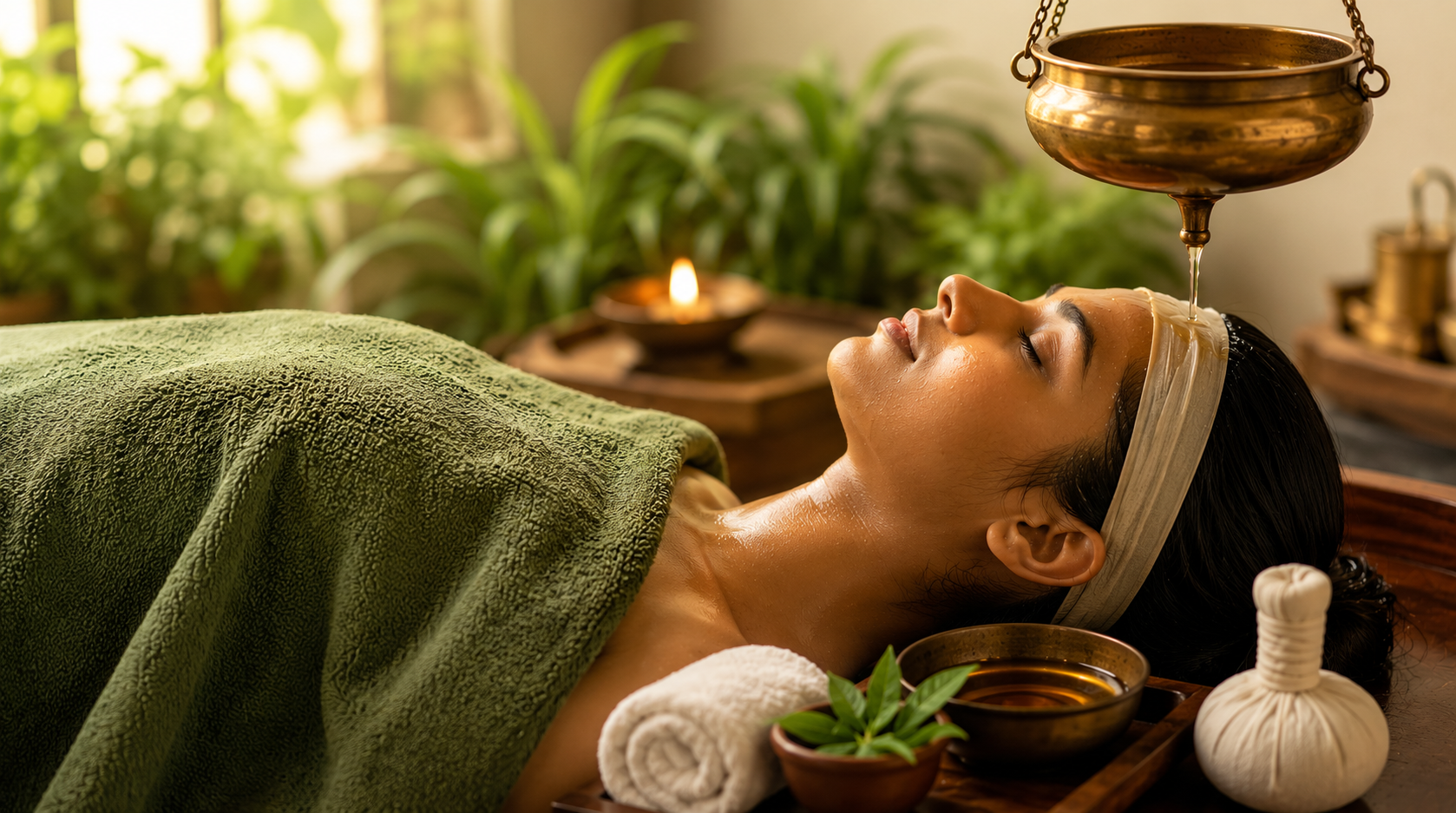
At our centre, our consultant Nicy (BAMS, who has 19+ years experience) assesses which pattern is showing up before recommending a therapy, rather than defaulting to one for everyone. Full detail on the Shirodhara and Sirovasti sessions we run is on our services page, but in short: Shirodhara is a continuous stream of warm herbal oil poured across the forehead, and Sirovasti holds herbal oil in a headgear worn over the scalp. Both are traditionally used for stress and tension-type patterns.
Nasyam, a gentle herbal nasal therapy, is traditionally used for sinus-related headaches and the congestion-driven head pressure that comes with them. And if your headaches are consistently screen-related, it's worth reading alongside our piece on screen strain and head tension, since the two overlap often in office workers.
Myth: If It's Natural, You Can Skip Seeing a Doctor
No. Most headaches are manageable and not a sign of anything serious, but some patterns need a doctor before anything else: sudden and severe onset, a new headache pattern after age 50, headache with fever and a stiff neck, or one with vision changes, weakness, or confusion.
This is the section that matters most, and it's the one most competitor pages skip entirely. According to HealthHub.sg, you should see a doctor if a headache doesn't improve within two weeks, gets worse, or comes with a stiff neck, confusion, numbness, weakness, vision changes, or difficulty speaking. A sudden, severe headache described as "the worst of your life," or one that changes character from what you usually experience, also calls for medical attention rather than a wellness therapy.
None of this is meant to alarm you. Most headaches genuinely are manageable. But an honest Ayurvedic centre should be the first to say: if what you're dealing with matches any of the above, a doctor comes first, not a therapy session. Ayurvedic care sits alongside medical care for stress-related tension. It doesn't replace medical assessment for anything that looks unusual.
If your headaches sound like the ongoing, stress-driven, end-of-day kind rather than anything on that list, a consultation at our Clementi centre can help work out which therapy pattern fits. Call +65 8186 3452 to book an appointment!
Myth: Warm-Oil Therapy Is Just Relaxation, Not Real Ayurvedic Practice
Not quite. Shirodhara has a documented physiological effect on stress markers: small studies have measured reductions in cortisol and shifts in relaxation-linked brainwave activity during sessions, though the evidence base is still early and mostly small-sample. It's more than a spa treatment, but it isn't a clinically proven cure either.
A small case study published in the Journal of Ayurveda and Integrative Medicine measured biological stress markers, including cortisol, in a patient undergoing Shirodhara, and found measurable reductions alongside improved mood scores. It's one case study, not a large randomised trial, and we're not going to oversell it. But it does support what the therapy is traditionally used for: calming an overactive nervous system, not eliminating a diagnosed neurological condition.
A typical Shirodhara session at our centre runs about 45 minutes, using warm herbal oils sourced from Arya Vaidyasala in Kottakkal, Kerala, a charitable Ayurvedic institution founded in 1902. The oil is poured in a slow, continuous stream across the forehead. Most clients describe it as deeply calming rather than dramatic, which tracks with what the research actually shows.
Myth: One Session Is Enough
Usually not. Most clients booking Shirodhara or Sirovasti for stress-related headache tension follow a short course, typically 3 to 5 sessions over a few weeks, rather than a single visit. One session can feel relaxing, but the pattern-level effect Ayurveda aims for tends to build over a course, not one appointment.
This is standard across most Ayurvedic therapies, not specific to headache work. The logic is cumulative: the herbal oils, the rhythm of weekly sessions, and any lifestyle adjustment the consultant suggests between visits are meant to work together over time, not in one sitting.
Our centre is CaseTrust accredited, which means the course-based approach is set out clearly before you commit to it, not vague promises about how many sessions "should" fix things. Your consultant will talk through a realistic plan based on what's actually showing up in your pattern, whether that's a short course or a longer one.
Conclusion
Headaches are common enough that almost everyone reading this has had one this month. Most are manageable, and a smaller number need medical attention first. Ayurvedic therapy has an honest, useful role here: supporting stress-related tension through therapies like Shirodhara and Nasyam, not curing a diagnosed condition. If your headaches sound like the stress-driven, end-of-day pattern, a consultation is a reasonable next step. If anything sounds closer to what's listed in the "see a doctor first" section above, start there instead.
Visit our Clementi centre, or call +65 8186 3452 to talk through what you're experiencing before booking anything.
Frequently Asked Questions
Can Ayurveda cure migraines?
No. Migraine is a chronic neurological condition with no cure, complementary or conventional. Ayurvedic therapy in Singapore is a wellness practice traditionally used to support stress-related head tension, not a treatment for diagnosed migraine. If you have migraine, a doctor should lead your care plan.
What is the difference between Shirodhara and Sirovasti?
Shirodhara is a continuous stream of warm herbal oil poured across the forehead. Sirovasti pools the oil inside a headgear worn over the scalp instead of a moving stream. Both are traditionally used for stress and tension-type head discomfort, and your consultant will recommend one based on your pattern.
When should I see a doctor instead of booking a therapy session?
See a doctor first if your headache is sudden and severe, comes with fever and a stiff neck, vision changes, weakness, or confusion, or is a new pattern starting after age 50. HealthHub.sg also recommends medical attention if a headache doesn't improve within two weeks or gets worse.
How many Shirodhara sessions are usually needed for headache-related stress?
Most clients book a short course of 3 to 5 sessions over a few weeks rather than a single visit. Your consultant will assess your pattern first and suggest a realistic course length.
Is Nasyam suitable for sinus-related headaches?
Nasyam is traditionally used for sinus congestion and the head pressure that comes with it, using gentle herbal nasal application. It's a different therapy from Shirodhara, chosen when the headache pattern points to sinus involvement rather than stress or tension.
This article is for general wellness information only and is not a substitute for medical advice. Please consult a qualified medical practitioner for diagnosis and treatment of any health condition.
Seek professional guidance for customized therapy plans
Find out more today at Indian Ayurveda Center at Blk 352, Clementi Ave 2 #01-101, Singapore 120352 !