
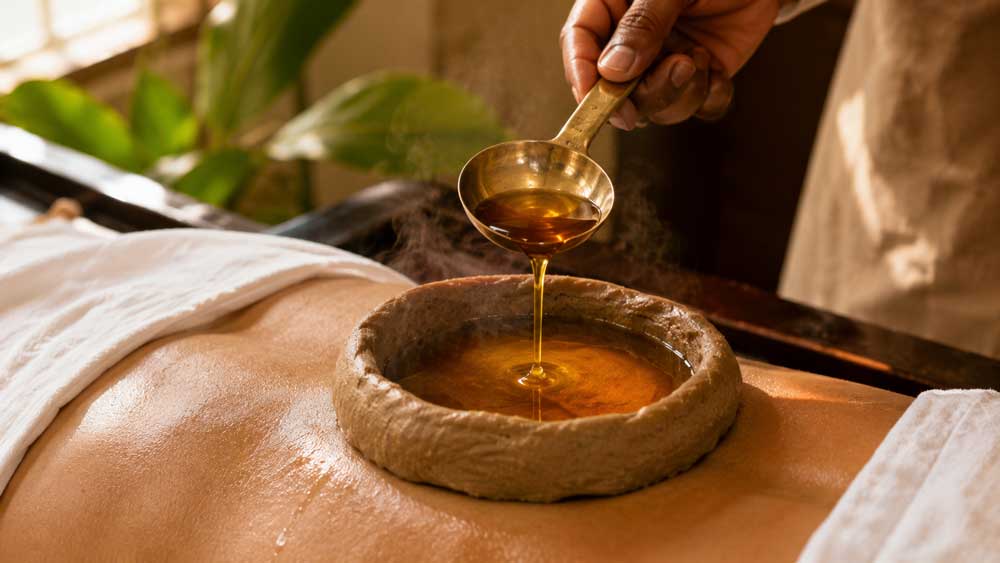
TL;DR: Kativasti is a Kerala Ayurvedic therapy where warm medicated oil is held over the lower back inside a dam of black gram dough for around 45 minutes. It’s traditionally indicated for lumbar discomfort and chronic stiffness. This guide walks through what a session involves, the evidence available, who it suits, and when to see a doctor first.
There’s a kind of back pain that turns up on Saturday morning. The week of meetings is over, the laptop is shut, and instead of feeling better, the lower back stiffens up the moment you stop moving. It’s a pattern many desk workers in Singapore know well.
Chronic lower back pain is defined as discomfort that lasts longer than three months. A 2022 cross-sectional study of Singapore adults found that 8.1% reported chronic low back pain in the past six months. A separate Singapore General Hospital survey of office workers put the figure higher, with 42% reporting lower back pain and 73.4% reporting some form of musculoskeletal discomfort.
Kativasti is a Kerala Ayurvedic therapy traditionally indicated for exactly this pattern of persistent lumbar discomfort. Sometimes spelled Kati Vasti or Kadeevasthi, the therapy holds warm medicated oil over the lower back for around 45 minutes, using a dough enclosure to contain it. If you’ve been considering Kativasti for ongoing back pain, it’s worth knowing what the therapy does and where the evidence stands before you book.
What is Kativasti?
Kativasti is an Ayurvedic external oil therapy where warm medicated oil is pooled over the lower back inside a dough enclosure for 30 to 45 minutes. The Sanskrit name combines kati (lower back) and vasti (retention or container). It sits within the snehana group of therapies, or external oleation, traditionally indicated for lumbar discomfort and stiffness.
The session itself is straightforward. You lie face down on the therapy table. The therapist rolls a flexible ring of black gram dough and lays it over your lumbar region, then warms a herbal oil chosen for your dosha and pours it gently into the enclosure. The oil stays warm throughout, and the therapist tops it up as it cools. After around 45 minutes, the therapist removes the oil and dough and gives the lower back a brief massage to settle the muscles.
The oils used vary. At our centre in Clementi, the medicines come from Arya Vaidyasala in Kottakkal, Kerala. Common preparations for chronic back pain include Murivenna, Mahanarayana Taila and Karpooradi Taila, selected after the initial consultation.
Why warm oil for chronic back pain?
In Ayurvedic theory, persistent lower back discomfort is often linked to an imbalance of vata, the body’s movement and nervous-system energy. Warm medicated oil is traditionally used to settle vata and soften surrounding tissue, supporting local circulation as it absorbs. The warmth is one part of the effect. The 45-minute hold is the other, long enough for the muscles around the area to drop their tension.
For a reader unfamiliar with the language, think of dosha as a way of categorising patterns of imbalance, not as a personality type. Vata covers the body’s movement and nervous-system energy. When it’s aggravated, joints and muscles tend to feel stiffer and colder, and discomfort can come and go without an obvious cause. A long week of sitting, irregular meals, and disrupted sleep is the kind of pattern Ayurvedic practitioners associate with vata aggravation.
Warm oil applied locally for 45 minutes is one of the more direct external responses available. The oil softens skin and surrounding muscle. The sustained warmth holds the area in a relaxed state long enough for tight muscles to release. Some clients describe it as the first time their lower back has properly let go in weeks. The mechanism isn’t fully mapped in biomedical terms, but Kativasti remains a standard therapy in Kerala for lumbar complaints.
What does the evidence say?
Research on Kativasti is limited, and most of it sits in Ayurveda-specific journals rather than mainstream biomedical literature. The available studies are small, often single-centre, and use varying protocols. Where comparisons have been made with exercise or yoga, results have been broadly comparable, with some studies reporting measurable reductions in pain scores over short courses.
A 2024 randomised controlled trial published on PubMed Central compared a one-week residential yoga programme with the same programme combined with Kati Basti (the same therapy under an alternative spelling). Both groups showed comparable improvements in pain, disability, and depression scores by the end of the week, with the Kati Basti group reporting slightly greater gains in physical-health markers.
Earlier work, including a randomised study by Panda and colleagues, compared Kativasti with exercise alone for chronic low back pain and reported meaningful reductions in pain intensity over a ten-day treatment course.
Early results are promising. The body of research is small. Larger, longer trials are still needed. For Singapore readers used to evidence-based medicine, that context matters. Kativasti has some early supportive research behind it, but it isn’t a clinically proven medical treatment.
Considering Kativasti for chronic back pain? Our consultant Nicy can talk through your situation in an initial consultation and let you know whether the therapy is a sensible fit. Call +65 8186 3452 to book.

Who Kativasti suits, and who should see a doctor first
Most chronic lower back pain in Singapore is mechanical and posture-related, the kind that builds up from long hours of sitting, poor desk setups, and not quite enough movement during the week. That’s exactly the pattern Kativasti is traditionally indicated for, and where most of our clients see results from a short course of sessions.
If your back pain follows that pattern, a Kativasti course is worth considering. Our consultant Nicy holds a Bachelor of Ayurvedic Medicine and Surgery from Calicut University and has practised for over 19 years, including time as a senior medical officer with the Department of Health in Kerala. The initial consultation covers what you’ve already tried, any current medication, and whether the therapy is the right fit before any session is booked.
That said, Kativasti is a complementary therapy, not a substitute for medical assessment. A small minority of back pain cases signal something that needs a doctor’s input first. The Singapore Medical Journal sets out the standard “red flag” symptoms: pain radiating below the knee with weakness or numbness, loss of bladder or bowel control, unexplained weight loss, fever or recent infection, a recent fall or significant trauma, persistent night pain that doesn’t ease with position changes, or new back pain in anyone over 60 with no clear mechanical cause. If any of those apply to you, please see your GP or a specialist before booking any complementary therapy.
For everyone else, the consultation is a sensible starting point. Bring any imaging or specialist reports along if you have them.
What a Kativasti course at our Clementi centre looks like
Most clients book a short course of five to seven sessions over two to three weeks, sometimes paired with Abhyangam, the full-body Ayurvedic oil massage, where overall stiffness needs settling as well. A single session can feel relaxing, but Kerala therapy traditionally works through accumulation, with each visit building on the last.
Each Kativasti session runs about 45 minutes of oil-pooling time, plus 10 to 15 minutes for setup and the closing massage. The therapy is led by therapists trained in India and now practising in Singapore. The centre has separate male and female therapy facilities, which matters for several of our clients.
The oils come from Arya Vaidyasala in Kottakkal, Kerala, a charitable Ayurvedic institution founded in 1902 and one of the most respected names in classical Ayurveda. Their hospitals in India are NABH accredited and their manufacturing units are GMP certified. Most Ayurveda centres in Singapore use unbranded or generic oils. We don’t.
Between sessions, Nicy may suggest small adjustments to daily routine, including warm meals, regular sleep, and short walks rather than heavy lifting. These are part of how traditional Kerala therapy is meant to support the body’s own response. The centre is CaseTrust accredited, located at Blk 352, Clementi Ave 2 #01-101, and open weekdays from 9am. Walk-ins are welcome.
Conclusion
Chronic lower back pain is rarely a single problem with a single fix. For many Singapore adults, particularly those who spend long hours at a desk, getting through it usually means a mix of approaches. Some medical input where needed. A small change or two in daily habits. And a course of therapy that works directly on the area. Kativasti is the Kerala tradition’s most direct response to this pattern of back pain.
If a regular massage hasn’t been quite enough, and there’s nothing more serious going on, a short course of Kativasti is worth considering. To book an initial consultation with our consultant, call +65 8186 3452 or visit us at Blk 352, Clementi Ave 2 #01-101.
Frequently Asked Questions
How is Kativasti different from a regular back massage?
A regular massage works the muscles through pressure and movement. Kativasti uses sustained warm-oil contact, held over the lower back for about 45 minutes inside a dough enclosure, before any massage begins. The duration of warmth and oil absorption is the difference. Many clients say a Kativasti session reaches discomfort that a regular massage has been working around for months.
How many Kativasti sessions do I need?
Most clients book a short course of five to seven sessions over two to three weeks, although the specifics depend on how long you’ve had the discomfort and what’s driving it. Our consultant plans each course individually after the initial assessment. A single session can feel relaxing, but Kerala therapy traditionally works through accumulation.
Is Kativasti safe if I have a slipped disc or sciatica?
That depends on your specific situation, which is why an initial consultation matters. For some people with mild, longstanding sciatica-related discomfort, Kativasti can fit alongside their medical care. For others, particularly those with significant nerve compression or recent injury, it isn’t suitable. Bring any imaging or specialist reports to your consultation.
Can I do Kativasti alongside physiotherapy?
Yes, in most cases. Many clients combine Ayurvedic therapy with physiotherapy, and the two often complement each other. We’d recommend keeping your GP, specialist, or physiotherapist informed about the therapy so your overall care plan stays coordinated.
What should I wear and bring to my first session?
Comfortable, loose clothing you don’t mind picking up traces of oil. We provide therapy garments at the centre, and showering facilities are available. Please bring any current medication list and recent scan reports if you have them. Arrive 10 minutes early for your first visit, as the initial consultation covers your history before any therapy begins.
This article is for general wellness information only. Ayurvedic therapy is complementary to, not a replacement for, medical care. If you are managing a diagnosed spinal condition, pregnancy, or any other ongoing health concern, please consult your doctor before starting any complementary therapy.
Seek professional guidance for customized therapy plans
Find out more today at Indian Ayurveda Center at Blk 352, Clementi Ave 2 #01-101, Singapore 120352 !